Editorial
Launched by the PCST Web and Social Media Committee, this monthly newsletter serves as your gateway to emerging trends in global science communication. Our mission is to foster international collaboration and provide a vital platform for interdisciplinary exchange.
Following a survey of our members, we have confirmed that official PCST announcements will be shared via the PCST website and email notifications. Our official social media platforms are Facebook, LinkedIn, WeChat and YouTube.
We have also decided to discontinue X as an official social media platform. WeChat will now serve as our primary channel for this audience. In line with this transition, this issue includes a practical guide to installing and using WeChat.
We warmly invite you to share ideas for potential news items with us at 2271883684@qq.com or gywang@suda.edu.cn.
Highlights
Connect with WeChat and China_PCST
 In preparation for the 2027 PCST Conference in Shanghai, China, we encourage you to install the international version of WeChat in advance. Using WeChat will allow you to follow official accounts, stay updated with conference information, and communicate easily during your visit. It also provides a convenient way to connect with colleagues, engage in one-on-one conversations, and participate in conference working groups.
How to install WeChat (international version)
Visit the App Store (iOS) or Google Play (Android) and search for “WeChat”. You can also install WeChat on your computer via the official website.
Once the app is installed, open it and tap “Sign Up”. Register using your mobile number and follow the on-screen verification steps. This may include entering a code sent to your phone.
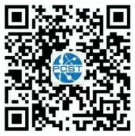
After installation, you can follow our official account, “China_PCST”, by scanning the QR code or searching for the account name within the app. WeChat’s built-in translation feature also allows you to read content in your preferred language with a single tap.
Global insights
2026 Beijing Science Communication Competition
The 2026 Beijing Science Communication Competition will take place from January to September 2026. This initiative aims to engage the public in science communication activities, promote the high-quality development of science communication in Beijing, and enhance scientific literacy across society.
Studies on Science Popularization, Issue 6 (2025)
Studies on Science Popularization, Issue 6 (2025), is a Chinese core journal sponsored by the China Research Institute for Science Popularization. This issue focuses on the high-quality development of science popularization, examining its theoretical foundations and mechanisms in supporting technological innovation. It also explores the shift from knowledge transmission to capacity building in the digital age, as well as the integration of culture and technology.
Additional sections address preschool science education, public scientific literacy, including AI competence, and a roundtable discussion on pathways for disciplinary development and talent cultivation in science popularization. Together, these contributions highlight current research frontiers in the field.
Article: The transmission of ethical values and governance principles in science and technology communication
This article explores the dual role of science communication as both a subject of and a tool for science ethics governance. It identifies key values to be conveyed, including the promotion of human well-being, respect for life, fairness, risk management, and transparency. The authors also examine the challenges of communicating these values in the context of the current technological revolution, such as unregulated content, information silos, and digital inequalities.
In response, the article proposes a set of governance principles grounded in historical awareness, humanistic care, and the spirit of scientific inquiry. It further highlights the need to strengthen practices across communicators, content, methods, and audiences.
2026 European Conference of Science Journalism in Hanover
From 14 to 16 October 2026, the European Science Journalism Conference (ECSJ2026) will be held in Hannover, Germany, with main sessions on 14–15 October, alongside the WPK’s annual Wissenswerte conference (15–16 October). Under the theme “Science Journalism in a World in Crisis,” the event is organised around three core strands: trust and accountability, connection and community, and skills and transformation.
The conference brings together science journalists to explore how rigorous, innovative, and impactful reporting can reveal truths, offer solutions, and drive meaningful change during times of global upheaval.
STOA workshop: Humanities and social sciences at the heart of Europe’s future
On 3 February 2026, the European Parliament’s Science and Technology Options Assessment (STOA) Panel hosted a workshop in Brussels and online, focusing on the upcoming Horizon Europe framework. The event advocated for a strategic shift from technology-driven competitiveness to a model that fully integrates the social sciences and humanities.
Experts, including MEP Lina Gálvez and Prof. Patrizia Nanz, discussed ways to embed democratic values in major initiatives such as AI and the green transition. By utilising tools like the Social Progress Index, the workshop emphasised the need to align EU research priorities with citizen well-being and sustainable growth, highlighting the critical role of inclusive, values-based innovation.
Commentary set: Science communication in changing political winds
In an era marked by populism, rising authoritarianism, and far-right movements that often question scientific knowledge, science communication faces significant challenges. How can dialogue- and inclusion-oriented engagement with the public and stakeholders be fostered when powerful actors deny science, or when audiences do not accept the premise that science produces valid knowledge?
This commentary set brings together researchers in science communication to examine these challenges and offer diverse perspectives. By questioning conventional approaches and exploring unconventional ideas, the contributions provide insights and strategies to navigate this complex landscape.
UK–Ghana ST&I Programme equips journalists to strengthen science communication
On 12 March 2026, Ghana launched a three-day media capacity-building workshop to enhance public understanding of science and technology. The programme trained 25 journalists in research evaluation, multimedia storytelling, and ethics.
Experts at the event emphasised the role of science journalists as “critical infrastructure” in a knowledge economy, bridging the gap between complex research and real-world applications. The initiative aims to ensure that scientific innovations in agriculture, health, and climate reach and benefit society, underlining the importance of informed and effective science communication for national development.
Scientists warn fake research is spreading faster than real science
On 7 March 2026, a study from Northwestern University revealed that scientific fraud has evolved beyond the work of a few rogue researchers into a global, organised enterprise. By analysing large datasets of publications, retractions, and editorial records, the researchers identified networks of “paper mills,” brokers, and compromised journals that systematically produce and sell fake research, authorship positions, and citations.
Apply now: Evert Clark/Seth Payne Award for a young science journalist (US)
The Council for the Advancement of Science Writing presents the Evert Clark/Seth Payne Award to recognise outstanding non-technical science journalism by writers aged 30 or younger, with eligibility through 30 June 2026. The 2026 award includes USD 1,000 and a certificate honouring excellence in communicating science to general audiences across print, digital, audio, or broadcast media.
The award seeks to encourage early-career science writers, celebrate high-quality public-facing journalism, promote accurate and accessible science communication, and support emerging talent in the science media landscape.