Webinar date: 12 March 2026
In teaching science communication, as well as in professional development, local contexts play a pivotal role. At the same time, science communication education typically brings together students from diverse cultural and national backgrounds, and audiences differ significantly depending on cultural and geographic factors.
The local and the global are therefore deeply interconnected, and continually influence one another. What does this imply for teaching and professional development? How can lecturers and students reflect global challenges within local contexts? And conversely, how can local perspectives inform our understanding of global issues? More specifically, to what extent can interventions that prove effective in one setting be transferred to another?
In this webinar, organised by the PCST Teaching Forum, we explored how lecturers in various parts of the world connect the global and local. Drawing on insights from Australia and India, our speakers collectively addressed the need for centering diverse perspectives and locally grounded practices for critical, contextual, and inclusive science communication education.
Speakers
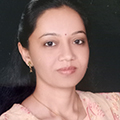 Dr Swati Bute
Dr Swati Bute is an Associate Professor of Journalism and Communication at Jagran Lakecity University, Bhopal. With 17 years in academia and seven years in the industry, her career includes key faculty roles at Amity University and the National Institute of Health and Family Welfare.
 Dr Heather Bray
Dr Heather Bray has over 20 years of experience in Science Communication as a practitioner, scholar, teacher, and researcher, and is currently the Coordinator of the Master of Science Communication and undergraduate minor in Science Communication at The University of Western Australia (UWA).
Emma Gill (moderator)
Emma is a member of the PCST Teaching Forum and a doctoral candidate in science communication at the The University of Western Australia (UWA).

