21 May 2026
The PCST Network hosted its second online Barcamp on 12 May 2026, bringing together science communication practitioners, researchers, entrepreneurs and learners from around the world for a 90-minute participant-led discussion. Among them were student members from China taking part through the Youth International Science Communication Enlightenment Programme, supported by the Zhejiang Provincial Federation for Science Popularization.
The federation, established in 2023 as China’s first provincial-level body dedicated to science popularisation, has worked closely with PCST in recent years. This includes ongoing participation in the Sci2U Conference and, since 2025, the support of 50 students from Zhejiang universities and overseas study programmes to join PCST as student members, alongside training activities under the Enlightenment Programme.
Unlike traditional conferences, a Barcamp has no fixed agenda. After a brief introduction, participants propose topics, vote on them, join breakout discussions, and later share insights with the wider group. For many students, this format offered a more open and accessible entry into international science communication.
The discussions were organised around three themes: science communication entrepreneurship, thinking local while linking global perspectives, and science communication in the age of artificial intelligence.
In the entrepreneurship strand, participants explored how small science communication ventures develop in practice. Facilitators highlighted the importance of identifying clear gaps in the market, such as training researchers to communicate effectively with non-specialist audiences. Contributors from different countries emphasised that sustainable practice depends less on general enthusiasm and more on defining a niche, building credibility and maintaining professional standards. Students reflected on the reality that new ventures often require sustained effort before becoming viable, and that in some contexts science communication itself is still an emerging field, meaning practitioners may also be building the market as they work.
The “Think Local, Link Global” discussion focused on inclusion and cultural context. Participants noted that language can shape who is included in scientific conversations, with English often dominating global science communication. Examples such as rural Chinese village wall slogans illustrated how communication can also succeed through locally rooted, culturally familiar formats rather than digital or high-tech approaches. The discussion highlighted that effective science communication depends on connecting with local languages, spaces and lived experiences, not only on technological sophistication.
The AI strand examined both opportunities and challenges. Participants agreed that AI tools are already widely used for tasks such as translation, summarisation and editing, but raised concerns about over-reliance and the need to preserve human judgement. Environmental impacts were also discussed, including the energy demands of AI infrastructure. In addition, students reflected on how AI-generated content may complicate public sentiment analysis and how evolving policy frameworks, such as those linked to the EU AI Act, may influence future practice.
Across all three themes, students emphasised how the Barcamp format encouraged open exchange between experienced practitioners and newcomers. The absence of formal hierarchy made it easier to discuss practical issues such as career uncertainty, professional identity and project development. Several participants noted that this helped make science communication feel more tangible as a career path, with clearer understanding of how individuals can find their niche and build credibility over time.
The session concluded with the announcement that PCST 2027 will be held from 24 to 27 May 2027 in Shanghai, China. For the student participants, this marked a symbolic moment, reinforcing the sense of connection between local experiences and the wider international science communication community.
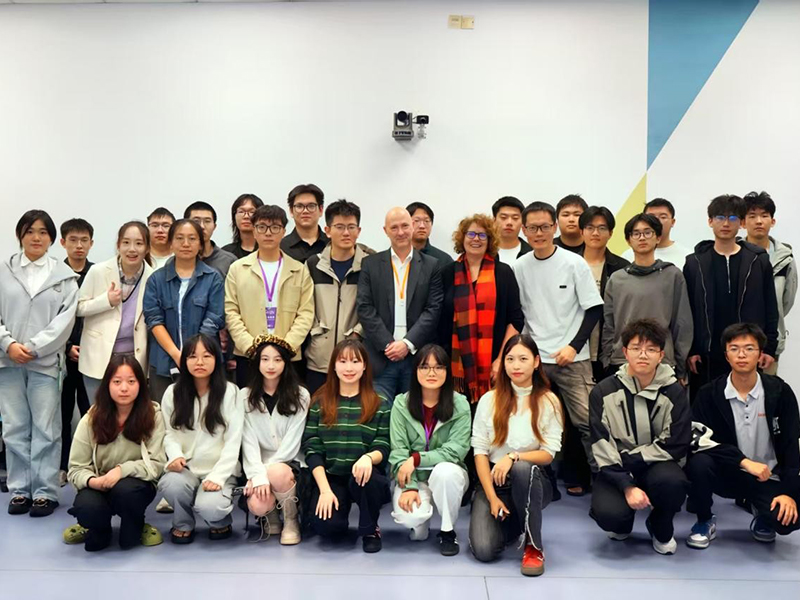
PCST President Fabien Medvecky with student members from the Youth International Science Communication Enlightenment Program at Sci2U 2025, Taizhou, China.
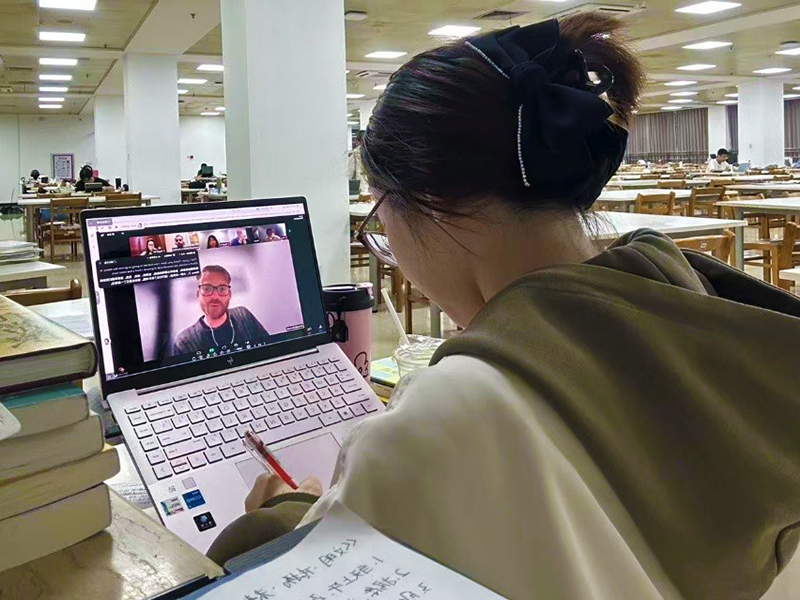
PCST student member Li Duo joining the online Barcamp discussion.
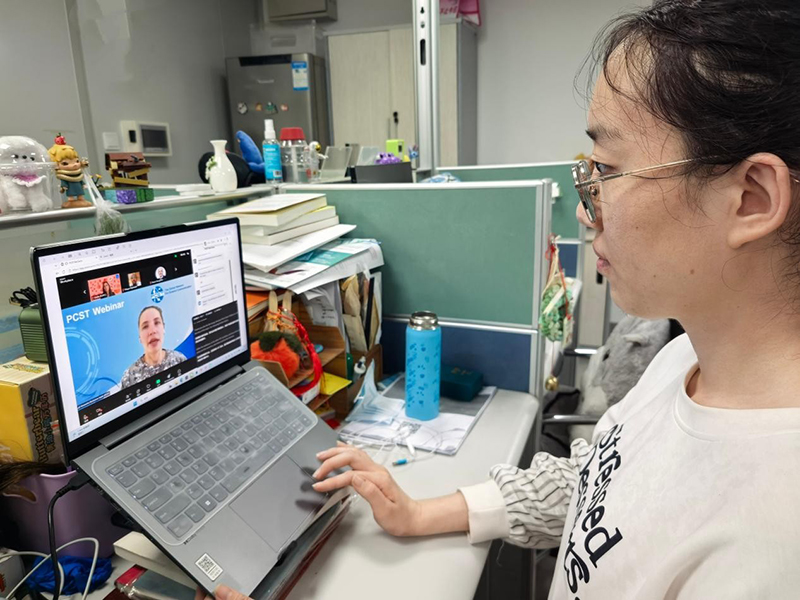
PCST student member Yan Ruyu contributing to the online Barcamp exchange.
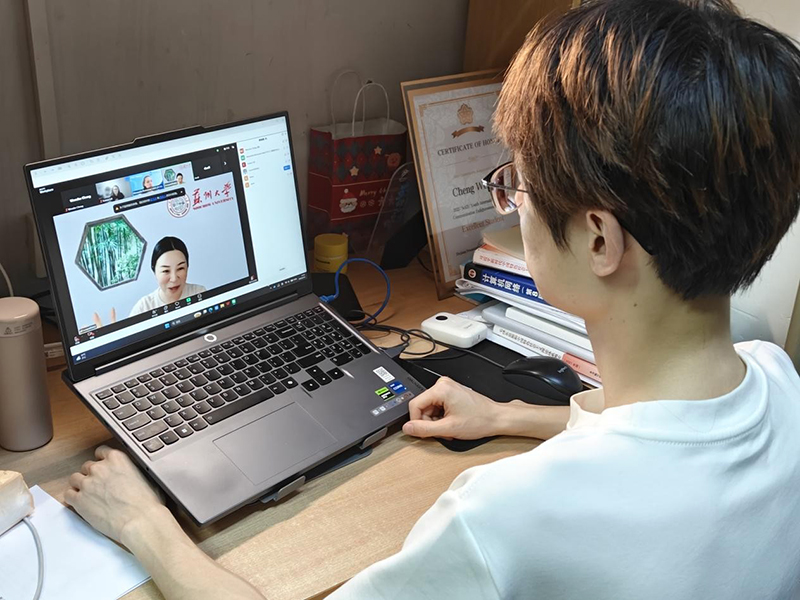
PCST student member Cheng Wenzhe taking part in the online Barcamp session.

